◆ PROMPT CRAFT · CAMERA ANGLES
The camera angles that make AI video look cinematic
The single fastest way to make Sora, Veo, Runway or Kling output look professional isn't a better model — it's naming the shot. Here are the eight camera angles that matter, each with a copy-ready prompt and what it's for.
Most AI video looks amateur for one reason: the prompt never told the model how to frame the shot, so it defaulted to a flat, eye-level middle distance. Real filmmakers think in angles first — and models respond to the same language. Lead your prompt with the camera angle, then the subject, then the motion, and the result jumps a tier in quality at no extra cost.
These angles, generated for real: the examples below are diagrams, but every angle here is achievable today — see real Sora, Kling and Seedance output on our homepage to judge the quality yourself.
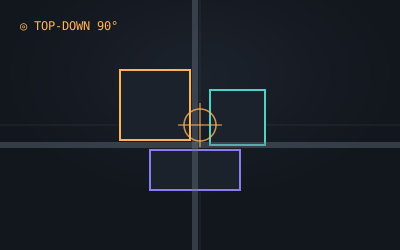
Drone / top-down (90°)
The classic opener. Directly overhead reveals layout and scale — perfect for establishing a location before you cut in closer.
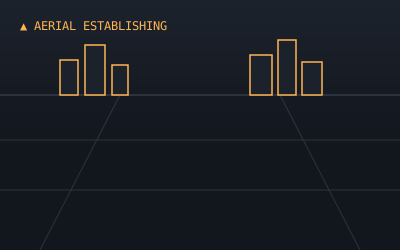
Aerial establishing (high wide)
A high, wide vantage that sets the scene. Great as the first shot of any sequence — it tells the viewer where they are.
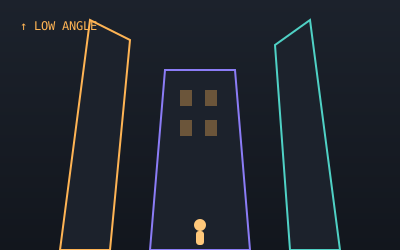
Low angle (looking up)
Makes subjects tower and feel powerful. Buildings, heroes and monsters all gain drama shot from below.
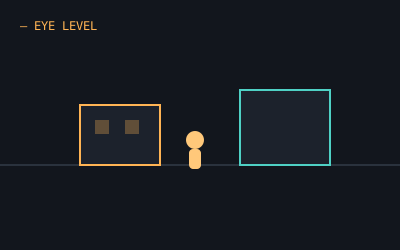
Eye level
The neutral, honest default. Eye level reads as realistic and relatable — ideal for dialogue, products and talking heads.
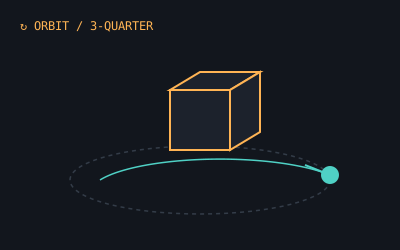
Orbit / 3-quarter
The reveal shot. Circling a subject shows dimensionality — the go-to move for product hero shots and character intros.
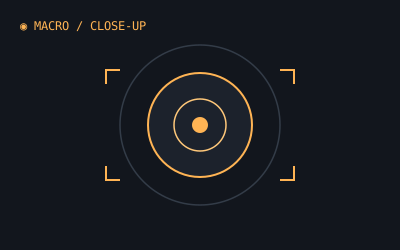
Macro / close-up
Intimacy and detail. Macro turns a texture, an eye or a droplet into the whole story — the punctuation of a sequence.
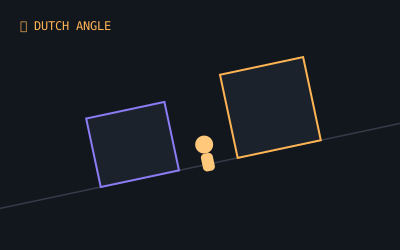
Dutch angle (tilted)
Tilt the horizon and everything feels off-balance. Use sparingly for tension, unease or energy — never for calm scenes.
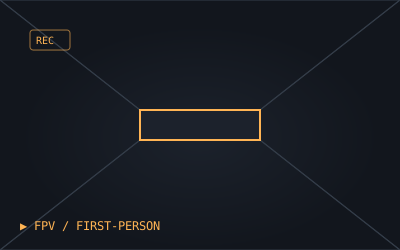
FPV / first-person
Pure immersion and speed. First-person flight pulls the viewer bodily through a space — the signature of modern AI video.
How to structure an angle prompt
The order matters. Models parse your prompt roughly left to right, so put the framing first — it sets the camera before the model decides what to render. A reliable template:
[camera angle] + [subject] + [action] + [setting] + [lighting/mood] + [motion]
For example: low angle shot, a lone archer drawing a bow, standing in a misty Japanese garden, soft golden light, slow push-in. Every clause does a job — and the first clause, the angle, is what most beginners forget.
Angles and cost: the retake connection
Ambitious angles aren't just harder to describe — they're harder to land. An orbit or an FPV flight involves complex, continuous motion that fails more often than a static eye-level shot, which means a higher retake ratio. Since your real spend is cost per usable second — list price times retakes — a dramatic angle can quietly cost two or three times what the price sheet suggests. That's not a reason to avoid them; it's a reason to budget extra attempts for your hero shots and keep the simpler angles for filler. Set a "High" or "Very high" retake profile in the calculator when you plan a sequence full of orbits and flights.
Which models handle which angles best
Not every model is equally good at every angle. Physics-heavy moves like FPV flights and fast orbits favor models with strong motion coherence — Sora 2 and Runway Gen-4.5 lead here. Slow, controlled reveals and consistent characters across angles are where Kling shines. For dialogue at eye level, Veo 3.1's lip-sync makes it the pick. Match the angle to the model and your retake ratio drops.
Planning a shoot? Price your full shot list — including the retake-heavy hero angles — in the cost-per-usable-second calculator before you generate a single frame.
Frequently asked questions
What camera angles work best for AI video?
Drone/top-down, aerial establishing, low angle, eye level, orbit, macro, dutch angle and FPV are the eight that cover almost every shot. Naming the angle explicitly in your prompt is the single biggest quality upgrade you can make.
How do you specify a camera angle in an AI video prompt?
Put the angle first, then subject, then motion — for example "low angle shot, camera looking up at a samurai, slow push-in". Leading with the angle tells the model how to frame before it renders.
Does the camera angle affect AI video cost?
Indirectly. Complex motion like orbits and FPV flights fail more often, raising your retake ratio — and cost per usable second is list price times retakes. Budget extra attempts for ambitious angles.